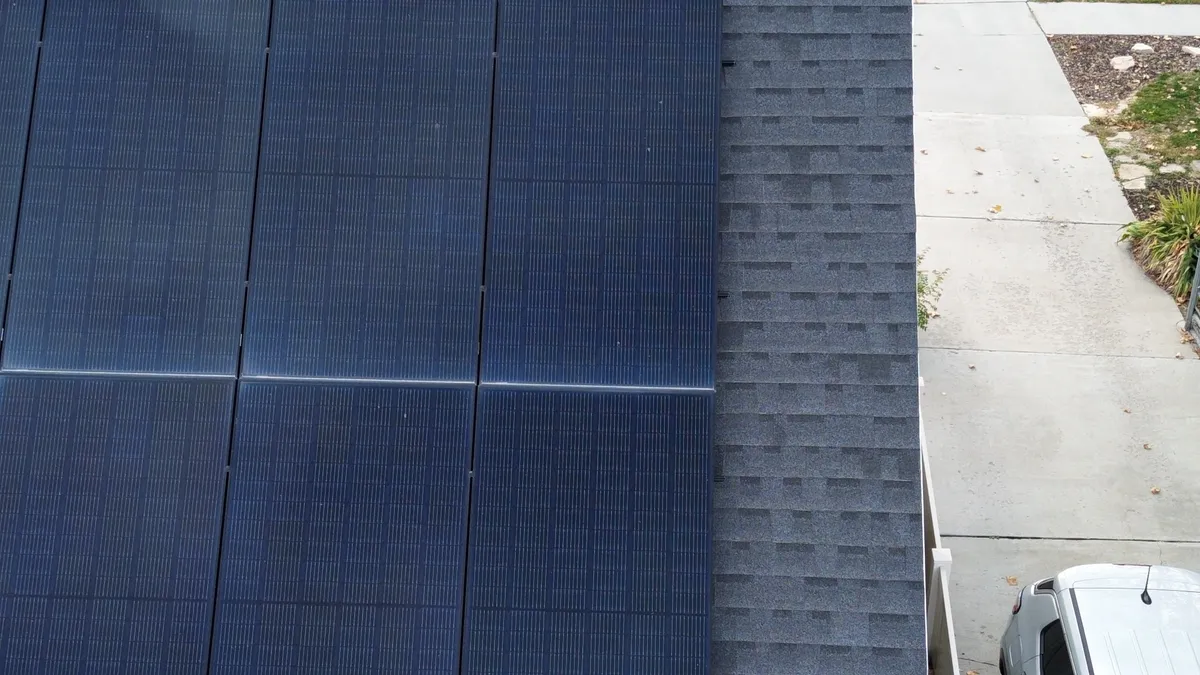
Arizona homeowners get some of the best solar production conditions in the country, but what happens when that 20-year-old tile roof finally starts to give way under your panels? It’s a question I get asked all the time! "Sunny, do I have to buy a whole new system?" or "Can I just fix the leak around the mounts?" The reality is that residential solar in Arizona eventually runs into the "roof life" problem. If your shingles or tiles need a refresh, you’re looking at a process called a "detach and reset." It sounds fancy, but it basically just means we’re taking the gear off carefully, fixing the house, and putting it back exactly where it belongs. I’ve seen way too many people panic when they see a water spot on the ceiling, thinking their solar investment is toast. It’s not! You just need a coordinated plan that respects both the electrical system and the structural integrity of your home. Let’s dive into how this actually works in the desert heat of 2026!
What Solar Panel Removal and Reinstall Actually Means
You know, I remember the first time I saw a "detach and reset" job go sideways. It was a buddy of mine down in Tucson. He hired a generic roofing crew to pull his panels so they could swap out some broken tiles. These guys were great with a hammer, but they treated those high-efficiency Tier 1 panels like pieces of plywood! They literally just stacked them in the driveway under the 110-degree sun without any protection. By the time they went to put them back up, half the connectors were filled with desert dust and a few cells had micro-cracks from the rough handling. It was a total heartbreak to see a $20,000 investment get treated that way just because the "removal" part wasn’t taken seriously.
When we talk about solar panel removal and reinstall in Arizona, we’re talking about a precision surgical procedure for your house. It’s not just unbolting stuff. You have to safely de-energize the system—and let me tell you, those DC strings can be dangerous if you don’t know your way around an inverter! We have to label every single wire and every single bracket. If you don’t map the layout perfectly, the "reset" part becomes a giant jigsaw puzzle where none of the pieces fit quite right. I always tell homeowners that the "removal" is actually the most important part of the "reinstall."
Another thing people forget is the mounting hardware. In our Arizona climate, those penetrations have been baking for years. When you pull the lag bolts out, you’re leaving holes in the roof deck that need to be handled correctly. You can’t just squirt some caulk in there and call it a day! A professional "detach" means removing the racking, inspecting the flashing, and making sure the roofers have a clean slate to work on. Then, once the roof is beautiful and new, we come back in and put the system back together with fresh seals. It’s a lot of moving parts, but when it’s done right, your system actually performs better because we can clean the panels while they’re on the ground!
Professional Takeaways
- Safe de-energization of the solar array and electrical disconnect before physical removal.
- Precise labeling and mapping of all wiring and hardware to ensure an exact reinstallation layout.
- Secure on-site storage of solar panels to protect against Arizona heat, dust, and physical damage.
Why Roof Readiness Matters Before the Reinstall
I once walked onto a job site in Mesa where the homeowner was in tears. She had just spent $12,000 on a new shingle roof, and the solar "reset" crew was refusing to put the panels back up. Why? Because the roofing company had installed the wrong type of flashing, and the solar mounts wouldn’t seat properly without risking a leak. It was a classic case of the left hand not talking to the right hand. The roofer thought he was doing a great job, and the solar guys were just following their safety manual. In the end, the homeowner had to pay to have a section of the new roof redone. It was an absolute mess that could have been avoided with a little bit of "roof-aware" planning.
This is exactly why I’m so passionate about "roof readiness." In 2026, we have amazing materials like stone-coated steel and high-temp underlayments, but they all require different mounting strategies. If you’re doing a reroof before solar, or even during a detach-and-reset, you have to make sure the mounting zones are reinforced. I’ve seen roofs where the decking was so thin that the solar lags barely had anything to bite into! That’s a major safety hazard when the monsoon winds start whipping through the Valley. We always check the rafters and the "attachment zones" before we even think about putting a single panel back on that roof.
You also have to think about the "detach and reset" cost versus the value of the roof. If your roof has three years of life left, don’t just "patch" it and put the solar back. You’re going to be paying the removal fee all over again in 36 months! That’s just throwing money into the wind. I always advise my clients to look at the "total cost of ownership." Sometimes it makes more sense to do the full reroof now while the panels are already off. It’s a bigger check to write today, but it saves you thousands in labor costs down the road. Plus, you get a fresh 25-year warranty on the roof that matches the life of your solar panels.
Professional Takeaways
- Verification of roof decking and structural rafters to ensure they can handle Arizona wind-uplift loads.
- Coordination with roofing crews to install solar-compatible flashing during the reroofing process.
- Long-term ROI analysis comparing simple repair versus full reroofing while the panels are already removed.
How Much Does Solar Panel Removal and Reinstall Cost in Arizona?
Let’s talk about the elephant in the room: the price tag. I know, nobody likes talking about costs, but I’m going to be straight with you. A professional "detach and reset" in Arizona typically runs anywhere from $150 to $250 per panel. So, if you’ve got a 20-panel system, you’re looking at $3,000 to $5,000 just for the solar labor. I’ve had people gasp when I tell them that! They say, "But Sunny, it only took them a day to put them up!" Yeah, but that day didn’t involve carefully unhooking wires, storing panels safely, disposing of old hardware, and then coming back weeks later to do it all in reverse.
The cost varies depending on a few things. Is your roof a 45-degree pitch that requires a crane? That’s going to add a premium. Do you have a "micro-inverter" system where every single panel has its own computer? That’s more labor than a "string inverter" setup. And then there’s the hardware. You don’t want to reuse old, brittle plastic clips or rusted bolts. We always include "fresh hardware kits" in our quotes because I refuse to put my name on a system held together by leftovers. It’s like putting old spark plugs in a brand-new engine—it just doesn’t make sense!
I also see a lot of homeowners try to get their insurance to cover the "detach and reset" after a hailstorm. This is a great move, but you have to be careful with the paperwork. Insurance adjusters sometimes "forget" to include the labor for the solar part of the roof repair. I’ve had to jump on the phone with adjusters more times than I can count to explain why we can’t just "lift the panels up with a jack." You have to show them the manufacturer’s requirements to maintain your warranty. If you don’t follow the proper "detach" procedure, you could void your 25-year equipment warranty. That’s a $15,000 risk just to save a few bucks on labor!
Professional Takeaways
- Standard Arizona detach-and-reset costs range from $150–$250 per panel depending on roof pitch and equipment type.
- Replacement hardware kits are essential to maintaining system integrity and long-term weatherproofing.
- Insurance claims for roof damage should explicitly include "solar detach and reset" labor to protect homeowner warranties.
Choosing the Right Arizona Solar Company for the Job
Finding a crew to handle a "detach and reset" is a bit different than finding an installer for a new system. Most big national solar companies hate doing repair work! They want the big "new install" contracts, not the "fix a leak" jobs. I’ve heard so many stories of homeowners calling their original installer only to be told, "We don’t do that anymore," or "We’re booked out for six months." It’s incredibly frustrating! That’s why you need a local Arizona solar company that specializes in "full-cycle" service. You want a team that understands roofing just as well as they understand electrical.
When you’re interviewing a company, ask them about their "storage plan." Where are the panels going to stay while the roofers are working? If they say "on the lawn," run away! They should be stacked on specialized "panel pallets" or stored in a secure trailer. Also, ask if they perform a "production test" before they take the system down. I always do this! It proves that the system was working perfectly before we touched it. That way, if something doesn’t work when we put it back up, everyone knows exactly what happened. It protects the homeowner, and it protects us. It’s just good business.
Finally, check their "roof-readiness" protocol. Do they coordinate directly with your roofer? They should! I love it when I can get the roofing foreman on a group text. We coordinate the "pull date" and the "reset date" so the homeowner isn’t sitting with a naked roof for three weeks. Communication is the "secret sauce" of a successful solar project. If a company is hard to get a hold of during the quoting process, they’re going to be a nightmare when you’re waiting for them to put your power back on. Go with the team that answers the phone and explains the "why" behind their process.
Professional Takeaways
- Verify the contractor’s storage and protection plan for your solar panels during the roof repair phase.
- Ensure the solar crew performs a pre-removal production test to document system health before work begins.
- Look for companies that provide clear coordination between roofing crews and solar technicians to minimize downtime.
Wrapping it up
Planning a roof repair when you have solar panels doesn’t have to be a nightmare! Yes, the "solar panel removal and reinstall" process adds an extra layer of complexity, but it’s also an opportunity to give your system a "tune-up." Use the time to clean the glass, check the mounting rails, and ensure your "roof readiness" is set for the next 25 years. Arizona homeowners have a huge advantage with our sun exposure, so don’t let a leaky roof or an old set of shingles stand in the way of your energy independence. Take it from me—a little bit of coordinated planning today prevents a massive headache tomorrow! If you’re feeling overwhelmed, just take it one step at a time. Get your roof inspected, talk to a professional solar crew, and make sure everyone is on the same page. You’ve got this!