What is residential solar planning?
Residential solar planning in Arizona means designing the system around real household goals, usable space, battery options, and installation quality. We make sure the project path is clear before panels go on so the finished system performs cleanly in desert heat.
Quick takeaways
- ●Home and site assessment before install.
- ●Coordination when project timing needs attention.
- ●Phased planning when the property needs prep first.
- ●Clean mounting and long-term service planning.
Solar That Stays Easy To Own
Solar is a great investment, but only if it is planned well. Sky Ridge Solar plans layout, timing, and installation details so the finished system stays clean, serviceable, and homeowner-friendly over the long term.
What You Get
- Production-led home assessment
- Coordinated install scheduling
- Clean mounting and layout planning
- Battery backup & storage options
- Guidance on available tax incentives
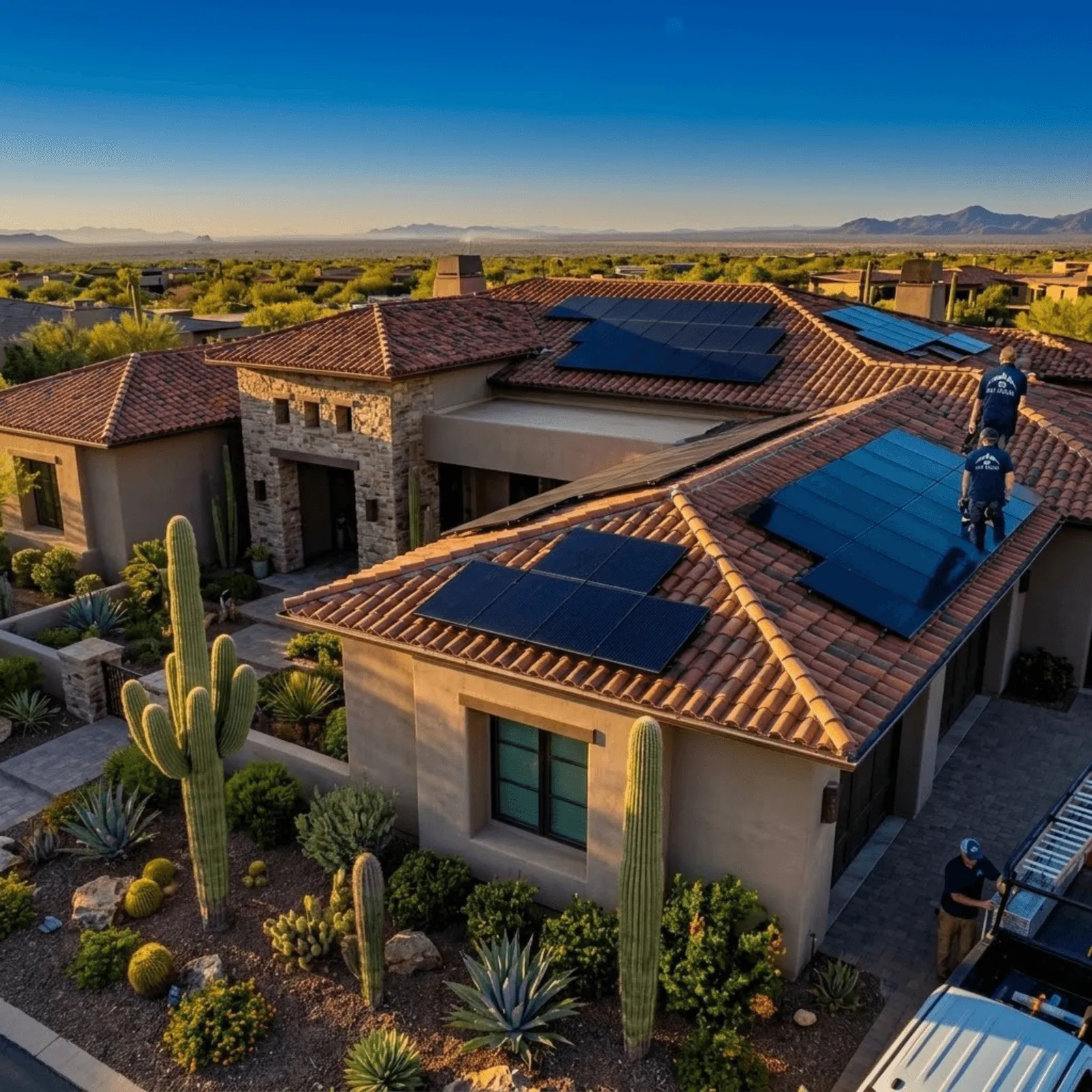
Arizona Solar Project Signals
Mounting | Sky Ridge Solar
Clean residential mounting strategy
Efficiency | Sky Ridge Solar
Arizona-oriented system performance
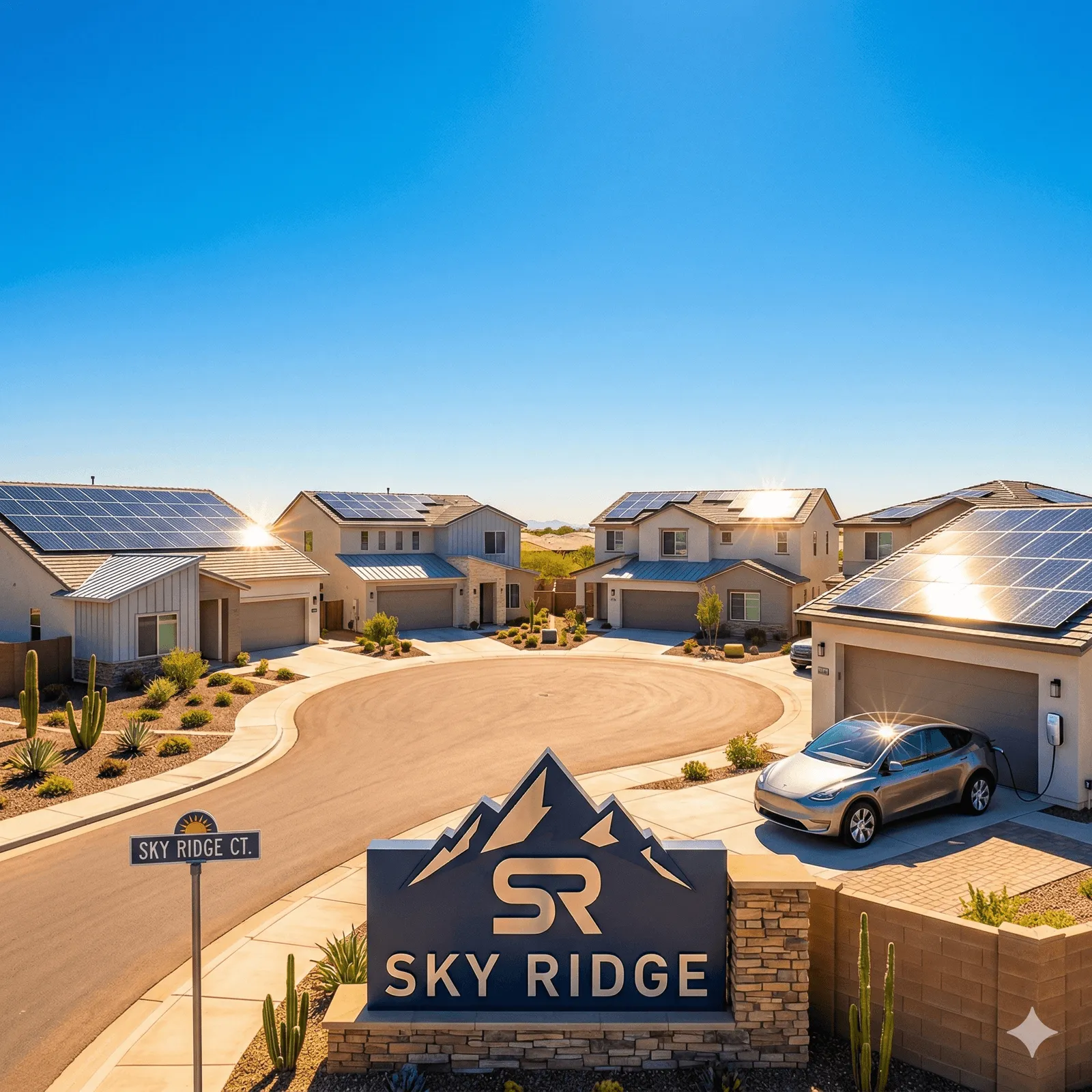
Coordinated | Sky Ridge Solar
Full system planning before install day
Arizona Installs | Sky Ridge Solar
Desert-ready system planning
Our Solar Process
1. Home Review | Sky Ridge Solar
We review usage, usable area, shading, and site fit before design is finalized.
2. Coordinated Plan | Sky Ridge Solar
We align layout, scope, equipment, and schedule before install day.
3. Professional Install | Sky Ridge Solar
The system goes in with production, presentation, and long-term serviceability in mind.
Solar FAQ
Can you plan solar if my home needs prep work first?↓
Yes. If timing or home-prep needs to be handled before solar, we plan that sequence first so the finished system is cleaner and more serviceable.
Do you coordinate phased solar projects?↓
Yes. We can sequence the project in stages when needed so planning, install timing, and follow-through stay organized.
What homes can support solar in Arizona?↓
Most homes can support solar. We evaluate usable space, shading, orientation, and installation approach during consultation.
How do you protect installation quality over time?↓
Our process focuses on clean mounting, layout quality, and long-term serviceability so the system remains easy to own.
Get an Arizona Solar Quote
Tell us about your goals, from lower bills to backup power, and we'll guide your next steps with a cleaner solar-first process.
Arizona Residential Solar Hub
Tie the main residential solar page to batteries, financing, project coordination, and the city pages where local intent becomes stronger.
Use solar panel installation, battery storage, solar project coordination to keep solar research connected to pricing, utility logic, and the local Arizona pages homeowners usually review before signing.
get a free solar review
Turn residential solar research into a tailored project review.
get a free solar reviewRelated services
Supporting guides
Residential Solar across Arizona
Browse the Arizona city pages where we connect residential solar to local utility realities, roof fit, and homeowner planning priorities.
Related Solar Pages
What Switching to Solar
Actually Feels Like in 2026
I’ve been in the solar industry for a long time, and I’ve seen just about every mistake a homeowner can make when trying to go green. Most people start because they’re tired of that massive summer electric bill hitting their inbox like a ton of bricks. We’ve all been there! You open the PDF from APS or SRP, and your heart just sinks. In Arizona, where we’re regularly hitting 110 degrees, that bill isn’t just a cost—it’s a mortgage payment.
The first thing most folks do is call one of those "get a free quote" numbers they saw on a Facebook ad. Big mistake! Those guys are lead-gen machines. They want your signature, not your long-term satisfaction. I remember a neighbor of mine who signed with a big national company. Three months later, his roof was leaking because the installers just blazed through the job without checking the shingle condition first. It was a mess, and he was stuck in a "he said, she said" battle between the solar company and his original roofer.
That’s exactly why we push for "solar integration." It sounds like a techy word, but it’s really just common sense. It means we look at your roof, your utility usage, and your future goals (like that Tesla you’ve been eyeing) *before* we talk about panel counts. I always tell my students—yeah, I teach a bit on the side—that a solar system is only as good as the roof it’s sitting on. If your shingles only have 5 years of life left, putting a 25-year solar system on top of them is a recipe for a very expensive headache later.
Another thing people get hung up on is the "payback period." Look, I love a good spreadsheet as much as the next guy, but solar isn't just about the math. It’s about the feeling of waking up on a Saturday morning in July, cranking the AC down to 72, and knowing you aren't paying the utility company a dime for it. That peace of mind is worth more than most people realize. Plus, with the 30% federal tax credit still going strong in 2026, the government is basically paying for a third of your investment. It’s a no-brainer if you plan on staying in your home for more than a few years.
Sunny's Reality Check
- ✓
Don't ignore the roof. A $20k solar system on a $5k roof is a bad move.
- ✓
Batteries are the "secret sauce" for 2026. Without storage, you're still at the mercy of utility peak rates.
- ✓
Ask for the "conduit run" plan. You don't want silver pipes running across the front of your beautiful home.
Solar Engineering
& ROI Standards
In 2026, solar is no longer just about panels. It is about building an integrated home energy plan that accounts for production, heat, attachment details, and long-term ownership.
We coordinate with structural review where needed to verify readiness and wind-uplift resistance. For Arizona homes, we prioritize heat-aware installation decisions that support long-term output and cleaner ownership.
30% Federal Tax Credit
Direct reduction in tax liability for 2026 installs.
Warranty Preservation
Our planning helps preserve installation quality and long-term service confidence.
The Cost of Waiting
Arizona utility rates continue to climb. Locking in your rates today provides a hedge against future energy volatility.
Homes with modern, integrated solar systems typically sell faster and for a premium compared to non-solar properties in the same zip code.
Our systems are built for long-term ownership with clean design, strong monitoring, and durable equipment choices.
The Physics of
Solar Readiness
We think carefully about the surfaces and heat conditions surrounding a solar array. In Arizona, thermal management and airflow around the system matter for long-term performance.
Thermal Mitigation
Solar panels lose efficiency as they get hotter. Better thermal planning helps systems maintain stronger output during high-UV summer days.
Mechanical Load Balancing
We evaluate attachment approach and load distribution so the system remains stable and serviceable over time.