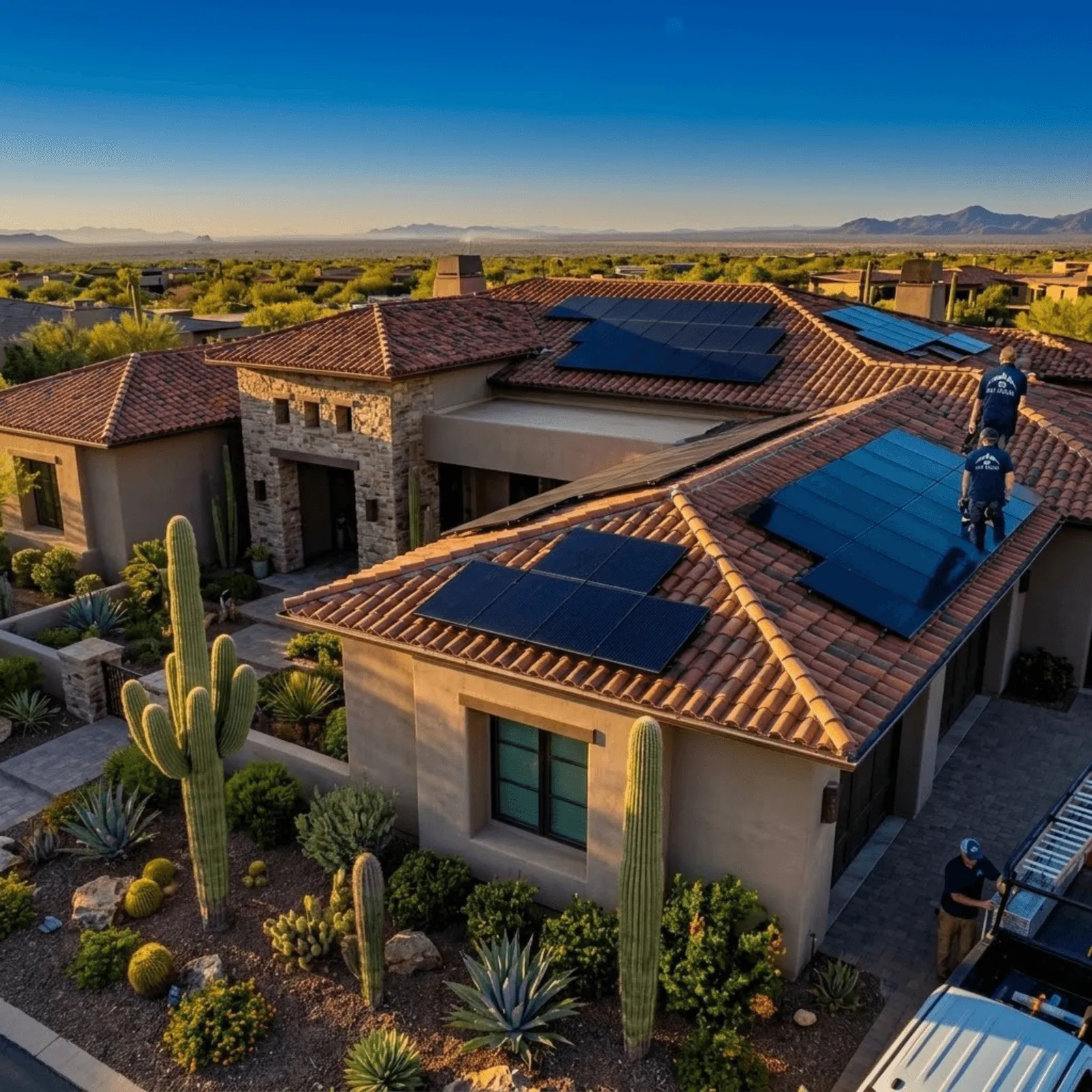
I remember sitting in a dark living room during a monsoon storm last July, listening to the hum of my neighbor's generator while my kids tried to do their homework by candlelight. It’s funny how fast "energy independence" goes from a buzzword to a survival strategy when the AC cuts out in 110-degree heat! If you’ve been looking at solar in Arizona lately, you’ve probably heard that the tax landscape changed on January 1st. But here is the secret most people are missing: while the old panel credits are shifting, the 30% Federal Battery Storage Tax Credit is still wide open and more valuable than ever in 2026. Whether you are adding backup to an old system or starting fresh, this incentive is the heavy hitter that makes the math work for most families I talk to.
What the 30% Battery Credit Actually Means for Your Wallet
Let's talk about the first mistake I made when I started looking into this: I thought the "battery credit" was just a small add-on to the solar panel credit. It's not! In 2026, standalone battery storage qualifies for a full 30% federal tax credit under the current laws. This is huge because it means you don't necessarily have to buy panels at the same time to get the break. If you already have solar and your only regret is not getting a battery back then, Uncle Sam is essentially offering to pay for a third of your upgrade right now. I’ve seen homeowners save anywhere from $3,000 to over $6,000 just by timing this right.
The beauty of the 2026 rules is the flexibility. You just need a battery with at least 3 kilowatt-hours of capacity, which is basically any residential unit worth its salt these days. I always tell my friends to look at their tax liability first, though. This is a non-refundable credit, meaning it can only take your tax bill down to zero. If you don't use it all in one year, don't sweat it—you can usually roll it over to the next. It’s like a gift card for your energy independence that keeps on giving!
Professional Takeaways
- The 30% credit applies to the total cost of the battery, including professional installation and necessary electrical upgrades.
- Standalone battery storage is fully eligible in 2026, removing the old requirement to link it to new solar panels.
- Capacity must be at least 3kWh to qualify, which covers almost every modern home backup solution like the Powerwall or Enphase 5P.
Why Arizona Homeowners Are Prioritizing Storage Over Panels This Year
If you've looked at an APS or SRP bill lately, you know that "exporting" power back to the grid isn't the gold mine it used to be. I learned this the hard way when I saw my first summer bill after a "panel-only" install. I was making tons of power at noon when I wasn't home, and then paying full price to cool the house at 7 PM. That’s why 2026 is the year of the battery in Arizona. By storing your own "free" sunshine during the day and using it during the expensive peak hours, you aren't just getting a tax credit—you are beating the utility companies at their own game.
I’ve had folks tell me they feel like they’re finally in control of their bills. It’s a bit of a triumph, honestly. Instead of being at the mercy of rate hikes or "time-of-use" traps, you’re running your home on your terms. Plus, the peace of mind during our crazy monsoon seasons is priceless. I stopped worrying about my fridge full of groceries every time the sky turns purple. With a 30% discount on that peace of mind, it’s a lot easier to pull the trigger on a system that actually protects your family.
Professional Takeaways
- Battery storage allows you to avoid high peak-hour rates by using your own stored energy when the grid is most expensive.
- Outage protection is a major driver in Arizona, especially with the increased grid pressure we've seen during record-breaking summers.
- Self-consumption of solar energy is significantly more profitable than exporting energy back to the utility at current buyback rates.
Common Mistakes When Claiming the Battery Credit (Don't Be Like Me!)
I’ll be the first to admit, I’m not a tax pro, and trying to read IRS forms is about as fun as watching paint dry in the Phoenix sun. The biggest mistake I see—and one I almost made—is not keeping the right paperwork. You need a "Manufacturer’s Certification Statement" for the battery you buy. It’s a simple piece of paper, but if you don't have it when you're filing Form 5695, you're going to have a stressful afternoon. I always tell people to create a "Solar/Battery" folder on their computer the second they sign a contract. Throw every receipt, permit, and certification in there immediately!
Another "gotcha" is the installation date. The credit is based on the year the system is *placed in service*, not when you paid the deposit. If you sign a deal in December 2025 but the installers don't finish until January 2026, you’re looking at a 2026 credit. This is why I always suggest starting your project in the fall. You avoid the "end-of-year rush" and ensure you’re up and running well before you have to worry about the next tax season. Don't let a scheduling delay cost you thousands because you waited until the last minute.
Professional Takeaways
- Ensure you receive a Manufacturer’s Certification Statement confirming the battery meets federal efficiency and safety standards.
- File IRS Form 5695 (Residential Energy Credits) with your federal tax return to claim the 30% incentive.
- Remember that the credit applies to the tax year the installation is completed and functional, not necessarily the purchase date.
Is 2026 the Last Chance for the 30% Credit?
People keep asking me if they should wait for "better tech" or "lower prices." Here’s my take: while the tech is always improving slightly, the incentives are the most unpredictable part of the equation. We’ve seen credits disappear overnight before. Right now, in 2026, we have a "sure thing" with the 30% federal rate. If you wait until 2027 or 2028, you might be looking at a smaller percentage or more red tape. I’ve always been a fan of the "bird in the hand" philosophy. If the math works today with a 30% discount, why gamble on what a future congress might do?
Plus, let's be real—the utility rates in Arizona aren't going down. Every month you wait is a month you’re paying for a grid that keeps getting more expensive. I’ve never met a homeowner who said, "I wish I waited longer to stop paying APS." Most people say the opposite—they wish they’d done it sooner. My advice? Use the 2026 incentive to lock in your costs now. It’s the smartest way to future-proof your home while the government is still willing to foot a huge chunk of the bill.
Professional Takeaways
- The current 30% rate is stable for 2026, but future legislative changes could reduce or phase out the credit in coming years.
- Locking in your energy costs today protects you against inevitable utility rate hikes over the next decade.
- Starting now ensures you are prepared for the peak summer heat and monsoon outages that Arizona is famous for.
Wrapping it up
The 30% Battery Storage Tax Credit is hands-down the most important incentive for Arizona homeowners to understand in 2026. It changes the conversation from "maybe solar" to "definitely storage." By taking advantage of this federal break, you’re not just saving a few thousand bucks on your taxes; you’re building a more resilient, cost-effective home for the next twenty years. I encourage you to check your tax liability, talk to a pro who actually knows the 2026 rules, and see how much you could really save. Don't let another summer of outages and high bills go by without seeing if the math works for your family!